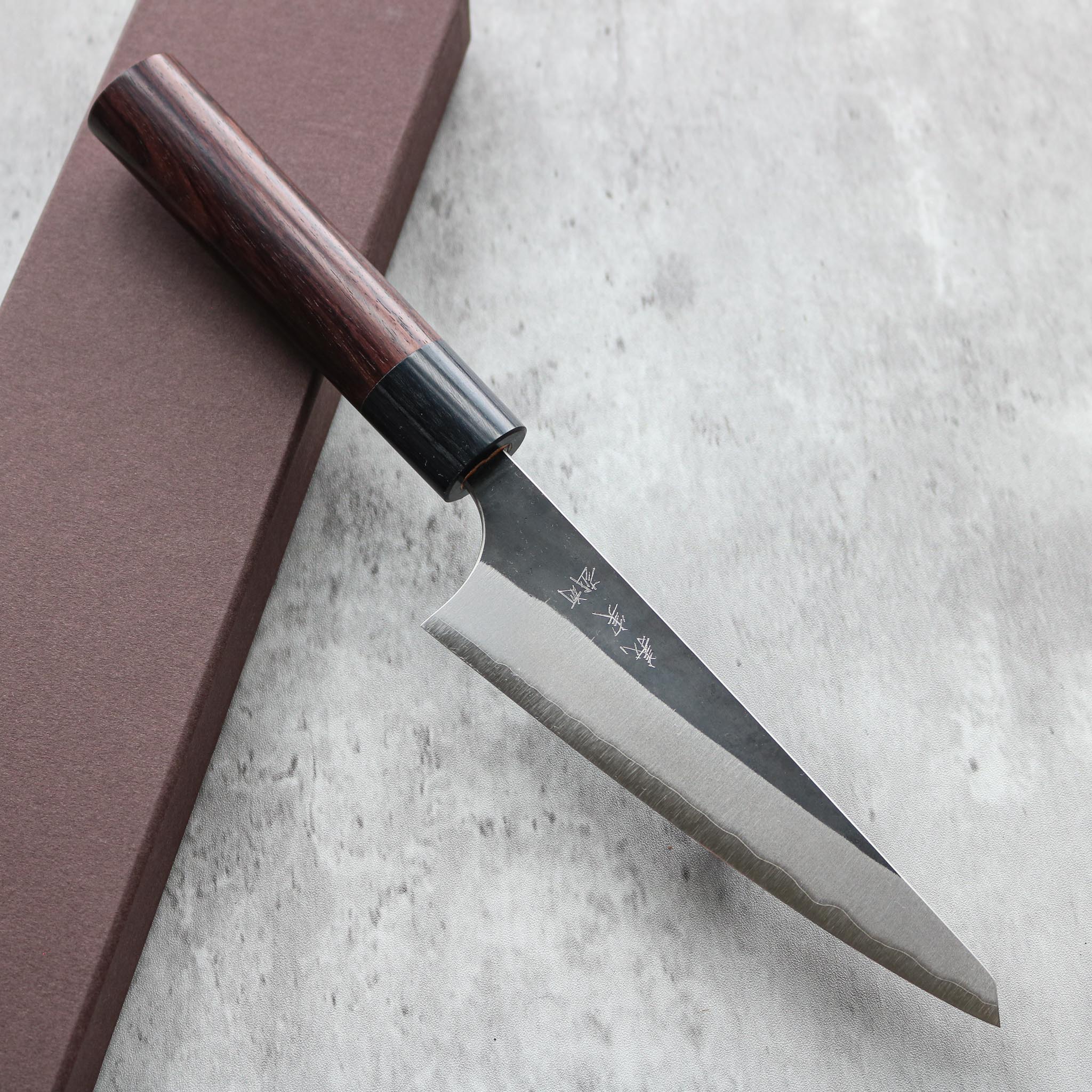
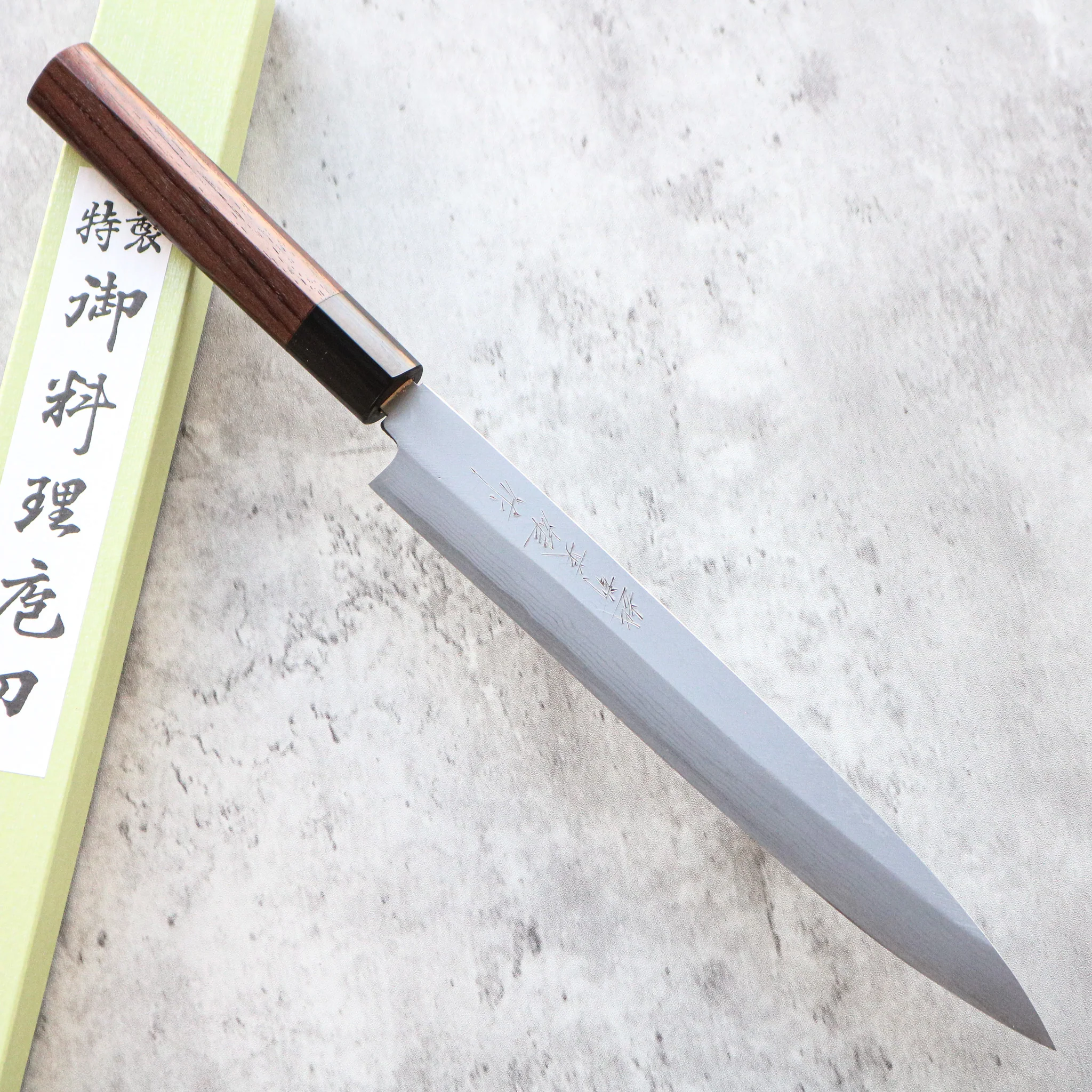
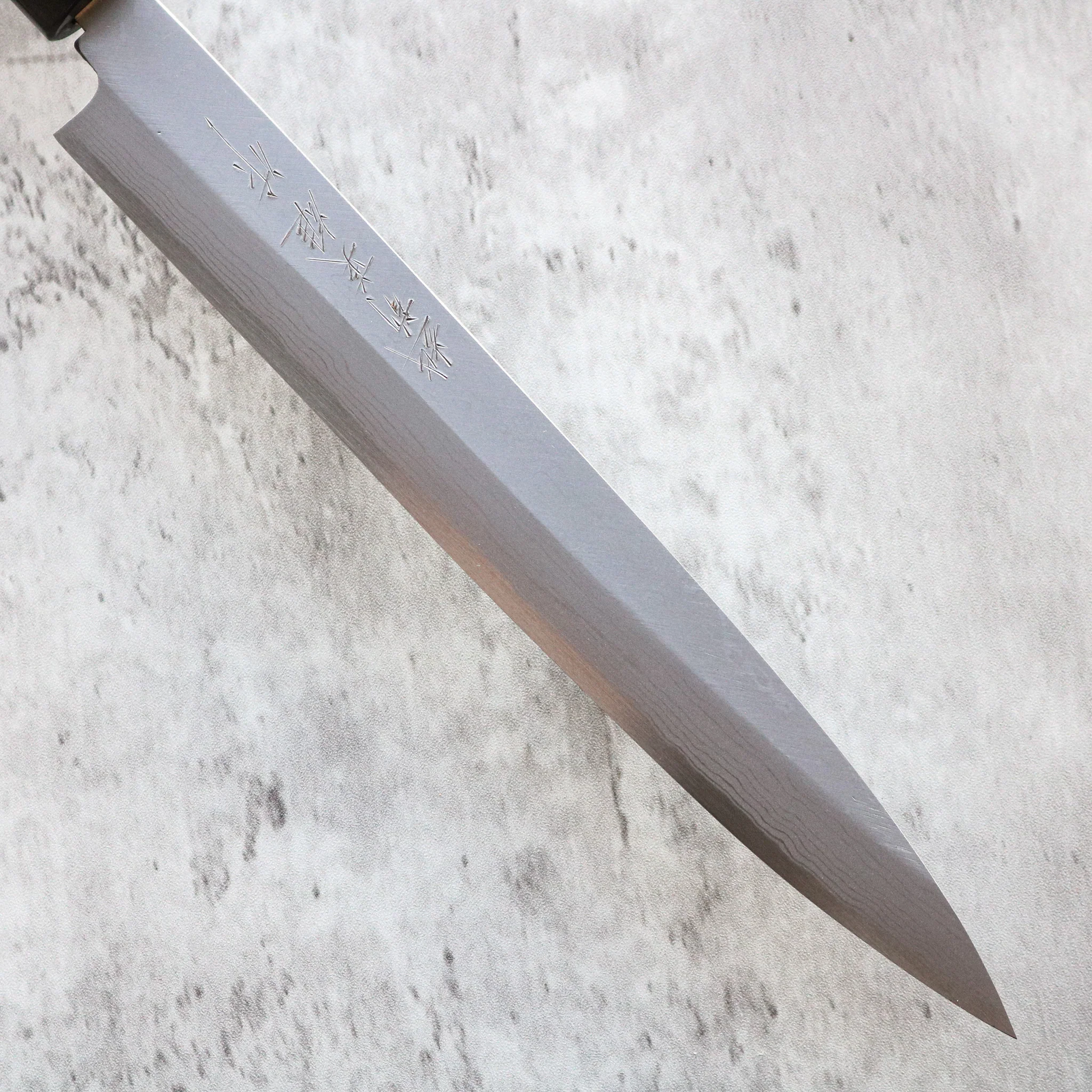
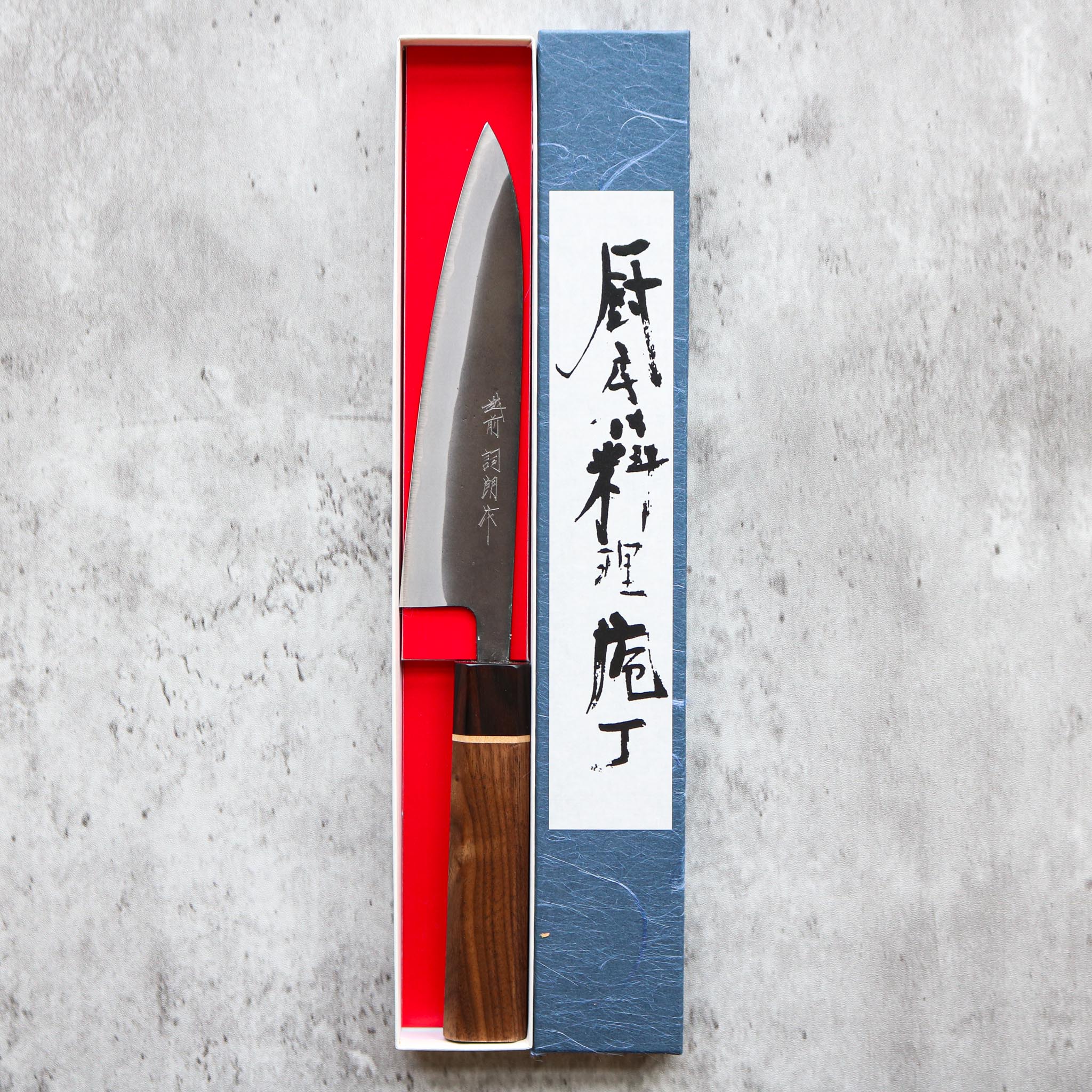
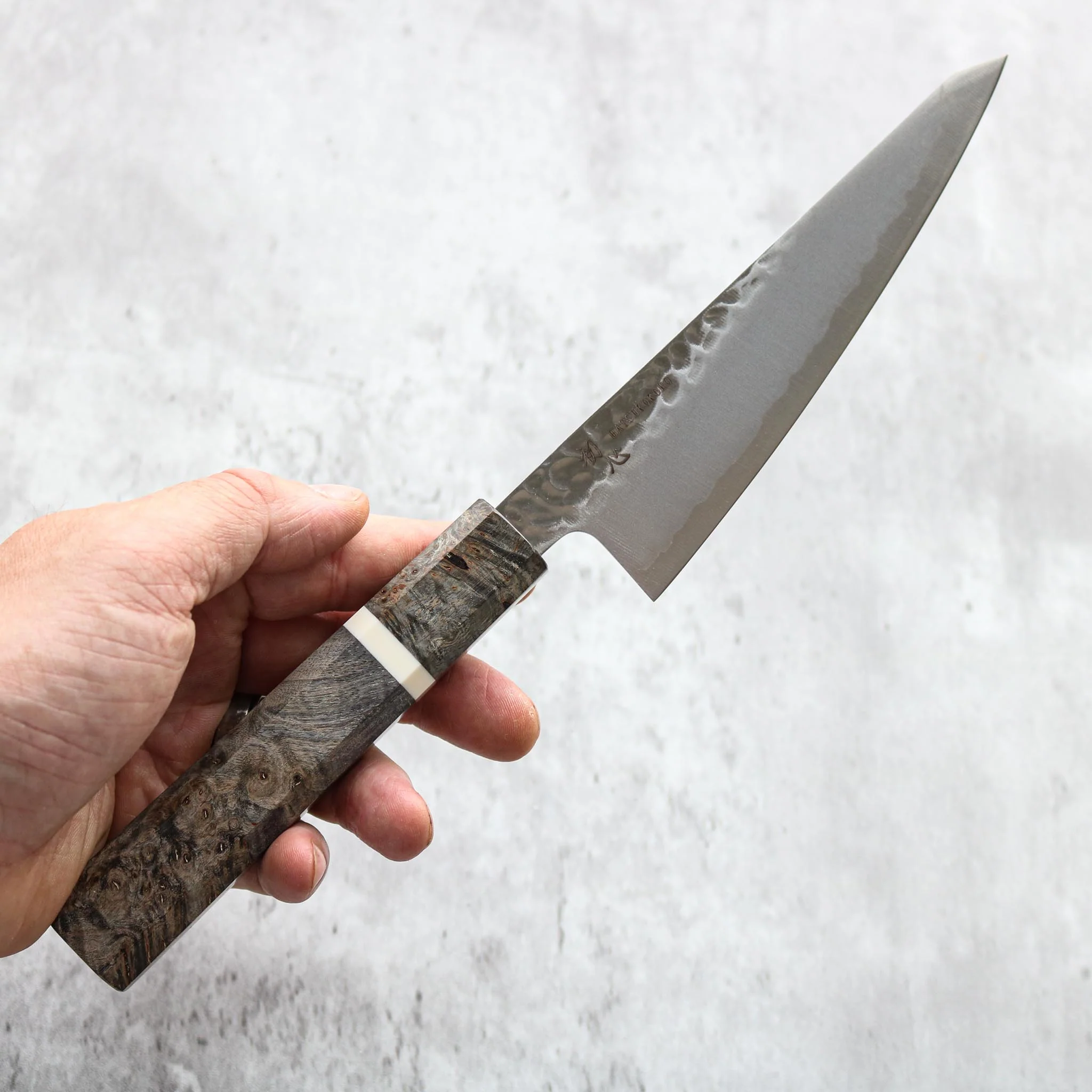
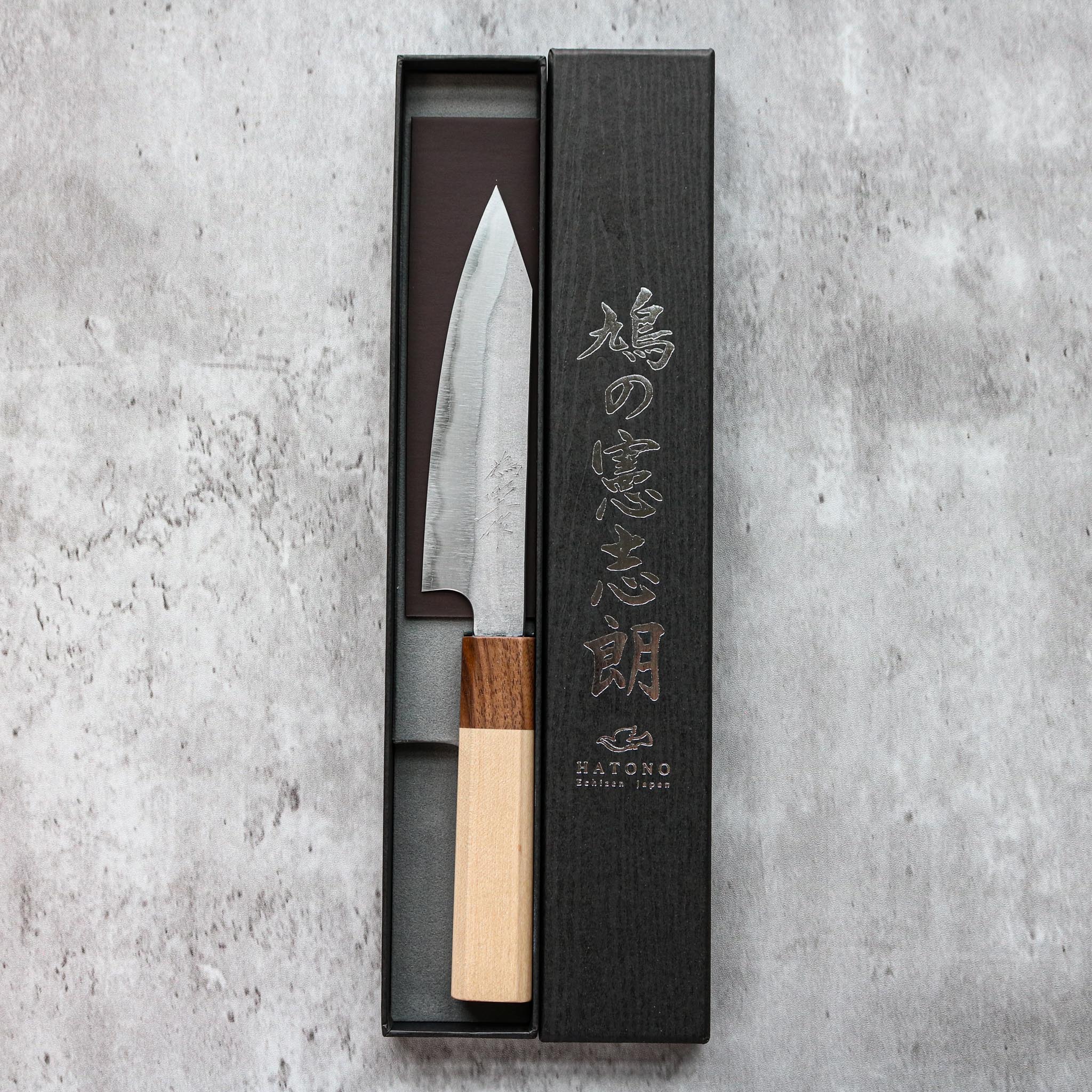
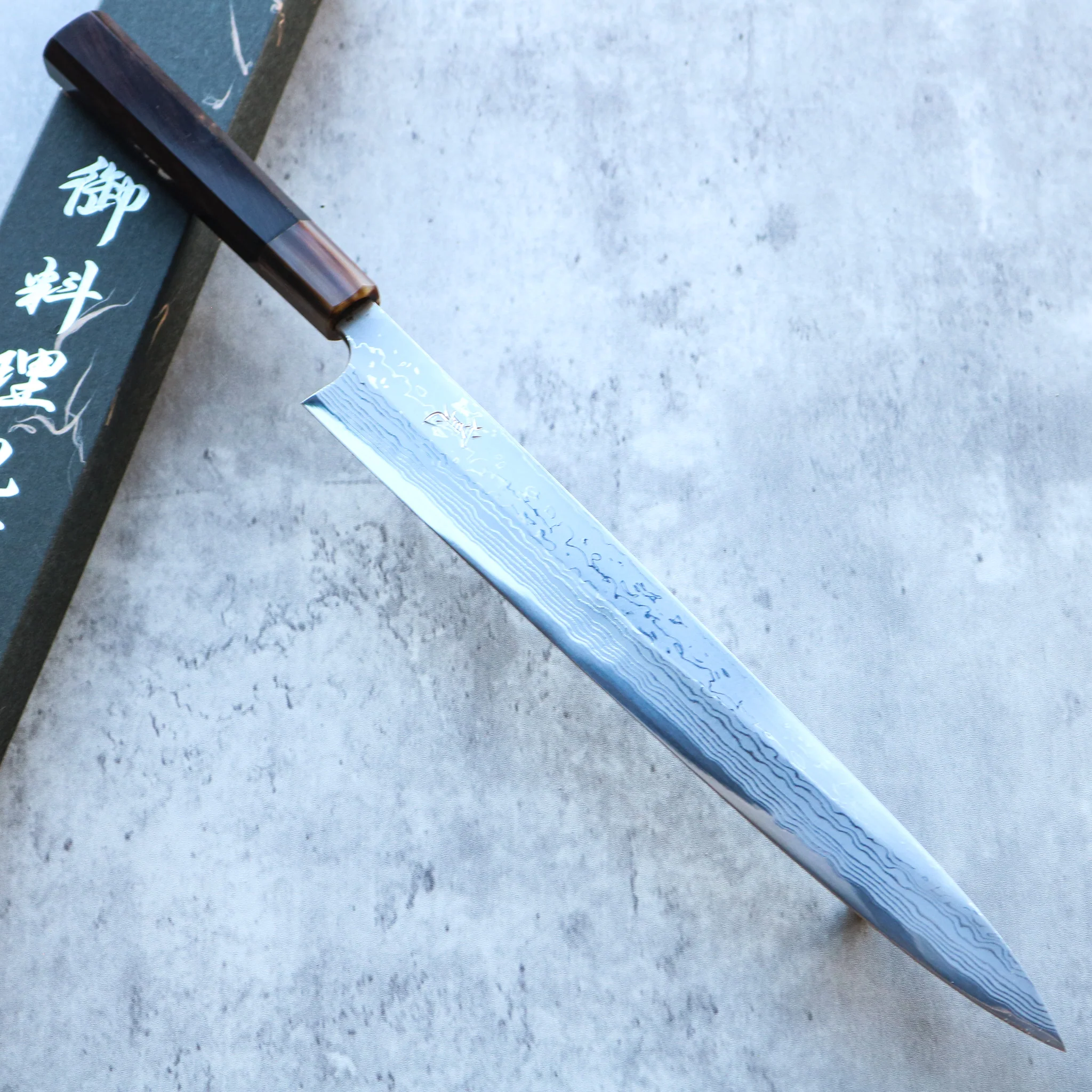
Naoki Mazaki Kurouchi Nakiri 175 mm
| Blade Length | 175 mm |
| Total Length | 323 mm |
| Steel | Shirogami (White #2) |
| Handle | Magnolia |
| Ferrule | Walnut |
| Rockwell | 62-63 |
| Height Spine to heel | 55 mm |
| Width at Spine | 5.3 mm |
| Weight | 169 grams |
| Bevel |
Double (50/50) |
The Blacksmith
Mazaki-san is a relatively new blacksmith but has gained a reputation as a great knife maker in a short amount of time. He focuses on producing knives in the most traditional ways possible and completes each knife by himself, only having added his first team member (His wife who does not help with production), in the past year. Mazaki-san uses a combination of pre-laminated and in-house laminated steels in an effort to makes knives in the most traditional ways possible and finishes each knife by hand polishing them on Japanese natural whetstones. He worked at Yoshikane Hamono, another very well regarded knife maker, for a number of years but decided to pursue the dream of opening his own business and we could not be happier that he did! Mazaki-san’s knives typically have a nice, tall blade height, and the profiles are always evolving with each batch, giving them a distinctly unique look. The distal taper on his knives are characteristic of Sanjo region knives, coming thick out of the handle, and thin at the tip.
The Knife
The Nakiri is designed for vegetable chopping. It has a flat profile (less curved blade) that helps the knife make consistent contact with the cutting board when using an up and down chopping motion, helping to avoid pesky accordions of stuck together ingredients. Any well rounded kit should contain a Nakiri, but if this is your first knife you might consider a Gyuto, Santoku or Bunka, as their pointed tips makes them more versatile.
- This Knife is made from 3 layers of material; A layer of iron on each side protecting a layer of carbon steel at the core, in a process referred to as Sanmai or forge welding. Iron and carbon steel are both susceptible to rust and must be kept dry and clean at all time’s to avoid oxidation and discolouration.
- Simply wipe the knife with a damp cloth immediately after use.
- Wash with regular dish soap and warm water using a none abrasive sponge or cloth.
- Never put your knife in the dishwasher! The extreme heat will ruin the wooden handle.
- Highly acidic ingredients (Onions, Tomatoes, Citrus) Will cause rust and oxidation to happen faster, thus the user must ensure the knife is wiped clean immediately after working with such an ingredient.
- Should any rust form it can be removed using a rust eraser or a mixture of Baking soda and water to simply scrub it clean.
- Avoid Bones, Frozen foods, nuts and hard candies or anything other than fruits, vegetables and proteins.
Original: $305.01
-70%$305.01
$91.50Product Information
Product Information
Shipping & Returns
Shipping & Returns
Description
| Blade Length | 175 mm |
| Total Length | 323 mm |
| Steel | Shirogami (White #2) |
| Handle | Magnolia |
| Ferrule | Walnut |
| Rockwell | 62-63 |
| Height Spine to heel | 55 mm |
| Width at Spine | 5.3 mm |
| Weight | 169 grams |
| Bevel |
Double (50/50) |
The Blacksmith
Mazaki-san is a relatively new blacksmith but has gained a reputation as a great knife maker in a short amount of time. He focuses on producing knives in the most traditional ways possible and completes each knife by himself, only having added his first team member (His wife who does not help with production), in the past year. Mazaki-san uses a combination of pre-laminated and in-house laminated steels in an effort to makes knives in the most traditional ways possible and finishes each knife by hand polishing them on Japanese natural whetstones. He worked at Yoshikane Hamono, another very well regarded knife maker, for a number of years but decided to pursue the dream of opening his own business and we could not be happier that he did! Mazaki-san’s knives typically have a nice, tall blade height, and the profiles are always evolving with each batch, giving them a distinctly unique look. The distal taper on his knives are characteristic of Sanjo region knives, coming thick out of the handle, and thin at the tip.
The Knife
The Nakiri is designed for vegetable chopping. It has a flat profile (less curved blade) that helps the knife make consistent contact with the cutting board when using an up and down chopping motion, helping to avoid pesky accordions of stuck together ingredients. Any well rounded kit should contain a Nakiri, but if this is your first knife you might consider a Gyuto, Santoku or Bunka, as their pointed tips makes them more versatile.
- This Knife is made from 3 layers of material; A layer of iron on each side protecting a layer of carbon steel at the core, in a process referred to as Sanmai or forge welding. Iron and carbon steel are both susceptible to rust and must be kept dry and clean at all time’s to avoid oxidation and discolouration.
- Simply wipe the knife with a damp cloth immediately after use.
- Wash with regular dish soap and warm water using a none abrasive sponge or cloth.
- Never put your knife in the dishwasher! The extreme heat will ruin the wooden handle.
- Highly acidic ingredients (Onions, Tomatoes, Citrus) Will cause rust and oxidation to happen faster, thus the user must ensure the knife is wiped clean immediately after working with such an ingredient.
- Should any rust form it can be removed using a rust eraser or a mixture of Baking soda and water to simply scrub it clean.
- Avoid Bones, Frozen foods, nuts and hard candies or anything other than fruits, vegetables and proteins.